Solar help for low-income homes in Wales
A walkthrough of the Nest scheme in Wales: who can apply, what it can include, what it cannot promise, and what to try if you do not qualify for help.
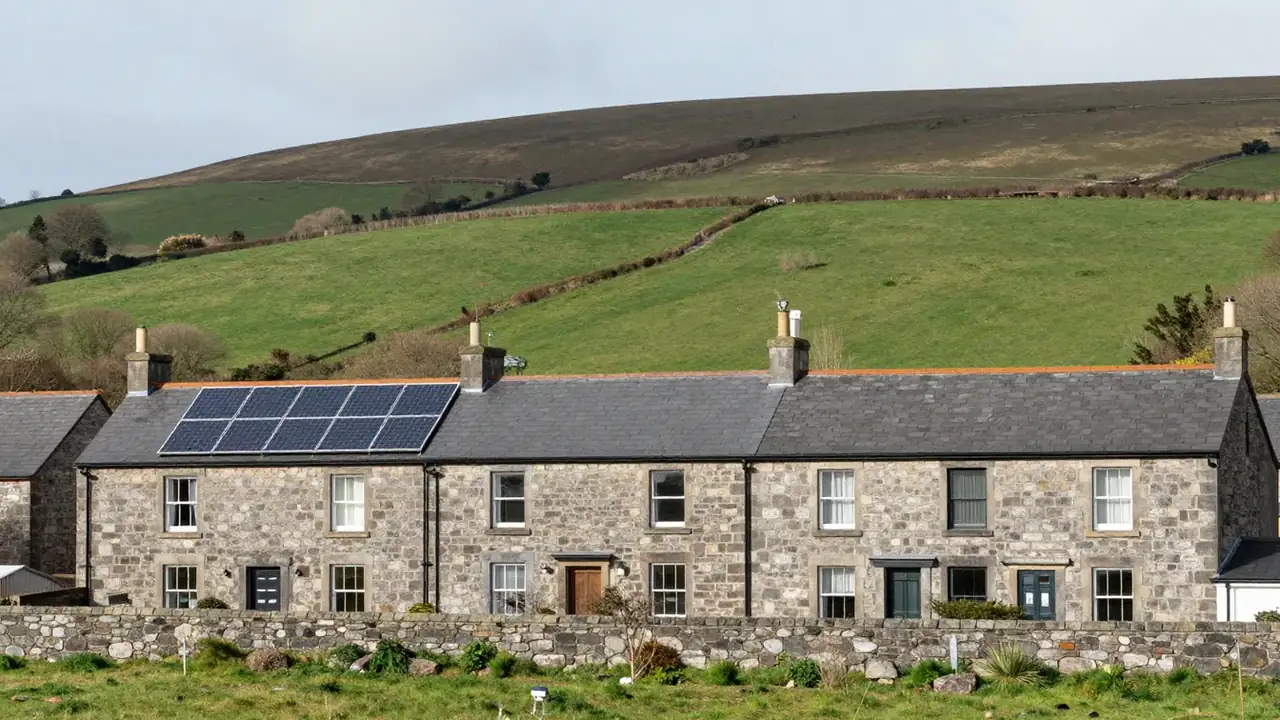
What Nest is
Nest is the Welsh Government’s fuel poverty scheme. It offers free advice and home improvements to help you save energy and money. Because it targets low-income homes, it suits some households better than others. The current scheme began on 1 April 2024.
The official Nest page lists boiler repair or replacement, heat pumps, insulation and solar panels. As of October 2026, we found no notice of a pause or closure. Even so, you should check the Nest pages before you apply.
Nest is not a menu you pick from, since an adviser looks at your home and suggests a package. Solar panels may be part of that, but they may not.
Who can apply
Nest has three main tests, and you must meet all of them. First, you own your home or rent from a private landlord. Council and housing association tenants are not eligible.
Second, you must get a qualifying benefit or live in a low-income household. Nest lists Child Tax Credit with individual income below £18,660 a year, income-related Council Tax Reduction, Pension Credit and Universal Credit. The low-income route uses set income limits that depend on your household, so use the official page to check yours.
Third, your home needs a low energy rating. In practice, the EPC must be 54 (band E) or less. If someone in your household has an eligible health condition, a rating of 68 (band D) or less can count. Homes rated D without a qualifying condition go on a reserve list.
The health condition route
Some health conditions can help a home qualify. Nest lists respiratory disease, circulatory disease, mental health conditions, dementia, and intellectual and developmental disorders. You will need evidence, such as prescriptions or GP or hospital papers.
This route matters because many older homes sit in band D. However, without a qualifying condition, those homes go on the reserve list. Read the Nest eligibility page carefully, because the wording is exact.
Our guide to EPC ratings and solar funding explains how to find your rating. Look it up first, so that you know where you stand. A quick check can save time later.
How to apply
Start from the Nest pages on gov.wales. Advisers check your eligibility after first contact, and there is an option to ask for a call back. Welsh-language contact is available.
Be ready with your benefit details and your address, because you may be asked about your income and your home. Our guide to solar funding if you get benefits lists the kind of evidence people often need.
Use only the official Nest route, since nobody should ask you for money to apply. Our page on the Wales Nest scheme explains the basics, and our overview of solar funding routes in Wales puts it in context.
What Nest cannot promise
Nest does not promise solar panels. The package depends on your home and on what an adviser decides. Therefore the official body makes the call, not us. Please do not plan your finances around panels you have not been offered.
We could not confirm whether Nest includes batteries. In particular, the official pages name heat pumps, insulation and solar panels but not batteries. Ask an adviser if a battery matters to you.
Nest rules may also change. The eligibility page carries no date, so you should treat what we say as correct as of October 2026. Check the official page before you rely on it.
What to expect after you apply
After first contact, an adviser checks whether you qualify. If you do, the scheme looks at your home and suggests improvements. Ask the adviser what happens next.
This can take time, so be patient and keep your papers together. If you hear from anyone claiming to be from Nest who asks for payment, stop. Contact Nest through the official pages instead.
If you do not qualify
You may miss the tests but still want panels. In that case, you can pay for a system yourself. Our guide on how to compare solar quotes shows how to check offers like for like.
You can also ask about export payments. The Smart Export Guarantee covers Great Britain, so it includes Wales. You need an MCS certified installation and a meter that can record exports.
If you rent, speak to your landlord first. For example, our post on solar panels for renters and landlords explains who can do what. Remember that private tenants can apply to Nest in their own right.
Differences across the UK
Funding is devolved, so Wales is not the same as England. For example, the England grant is called Warm Homes: Local Grant, and it is for England only. Our guide to solar funding routes in England covers it.
Northern Ireland differs again, since there is no general grant for home solar there. Our post on solar support in Northern Ireland explains what is available.
Finally, beware of cold callers who say a Welsh grant is guaranteed. Real help comes through the official scheme. If you are unsure, check the Nest pages before you share any details.
Common questions
- Does Nest pay for solar panels in Wales?
- Nest lists solar panels among the improvements it can include. Each home gets a package assessed for it, so solar is not guaranteed. An adviser decides what suits your home.
- Who can apply to Nest?
- You must own your home or rent privately. You also need a qualifying benefit or a low household income, and a home with a low enough energy rating. Council and housing association tenants are not eligible.
- Which benefits count for Nest?
- Nest lists Child Tax Credit with an individual income below a set limit, income-related Council Tax Reduction, Pension Credit and Universal Credit. Check the Nest eligibility page for the current limit.
- Is the England grant available in Wales?
- No. The Warm Homes: Local Grant is for England only. In Wales you would look at Nest instead.