Council solar schemes and group-buying explained
Councils can help with solar in two different ways: grant routes and group-buying schemes. Learn how each one works and how to check a scheme is genuine.
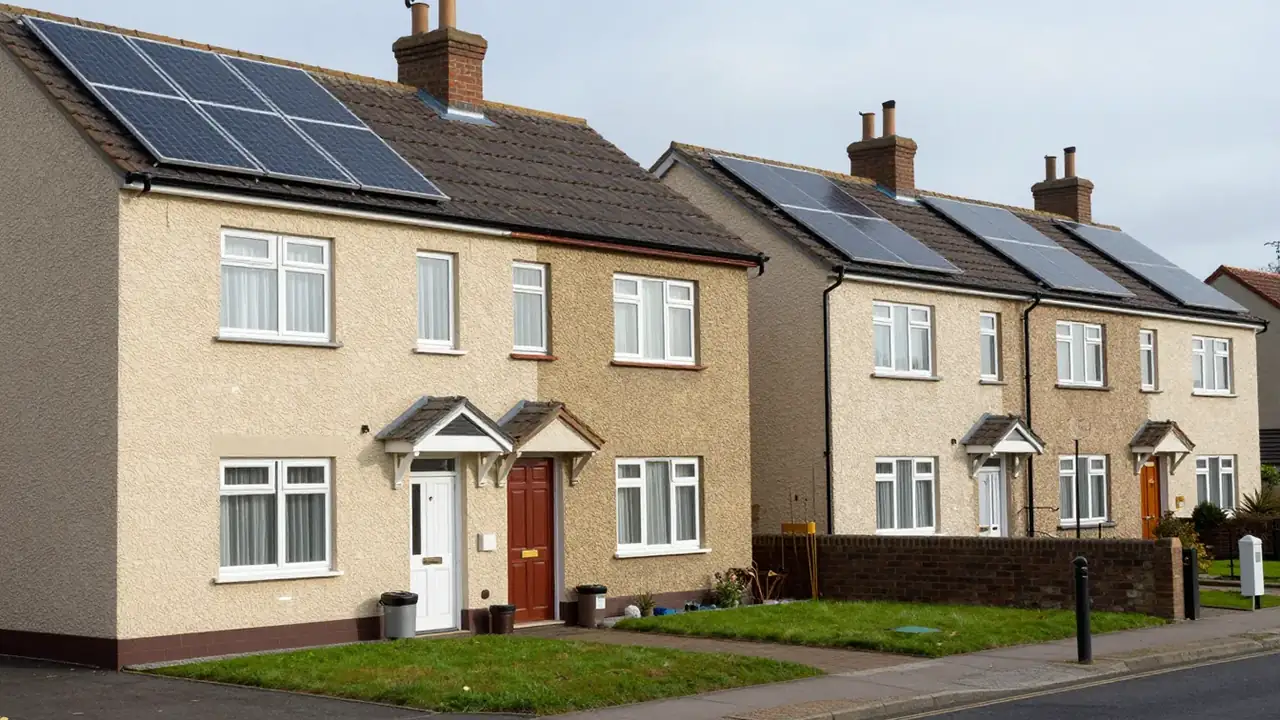
Two things councils can do
People often say “council solar scheme” and mean two different things. One is a grant route, where the council helps pay for work in eligible homes. The other is a group-buying scheme, where the council helps residents get a better price.
The two work in very different ways, and so the first step is to work out which one you have been offered. Then you can check the right facts.
Grant routes run by councils
In England, the main grant route is the Warm Homes: Local Grant. GOV.UK says that if you are eligible and your council has funding, it will arrange a home survey. The council then organises and pays for the agreed work.
Funding depends on the council. As a result, not every household will get panels, and solar is only one of the improvements it might suggest. Our guide to EPC ratings and solar funding explains why your home’s rating matters here.
You apply through GOV.UK, because a leaflet or a caller is not the official route. For details of who can apply, see our guide to solar funding routes in England. Wales has its own scheme, which our post on solar help for low-income homes in Wales explains.
How group-buying works
In a group-buying scheme, a council works with a delivery company. Residents register their interest, and pre-vetted installers bid for the work. Dorset Council says the more people who register, the better the deal should be for each household.
After the auction, you get a recommendation. However, you decide whether to accept it. Dorset Council says there is no obligation to continue. The West of England Combined Authority says applicants have four weeks to decide.
These schemes are a price deal, not a grant. The council pages we checked do not describe any government money for your panels. Still, a group deal may bring the cost down.
Check what is open now
Rounds are local and run for a limited time. For example, Cheshire West and Chester Council ran a round that it called Switch Together Solar, previously known as Solar Together. Registration was free until 25 September 2026, so that round has now closed.
As of October 2026, we have not confirmed which councils have a round open. Rounds change, so check your own council’s website.
St Albans City and District Council says residents can register for free and without obligation. That is the standard to expect. If a scheme asks for money just to register, be careful.
How to check a scheme is real
Scammers like to borrow a council’s name, so take care. Our guide on free solar panels in the UK explains why “free” offers need checking. A few simple steps will keep you safe, and they take only a few minutes. The same steps apply to any offer that mentions your council.
- Type your council’s web address yourself, rather than clicking a link.
- Look for the scheme on the council’s own energy or climate pages.
- Ask the council if the delivery company is its official partner.
- Never pay a deposit to register interest.
- Take your time, and ask a relative or friend to look it over.
Pensioners are often targeted by pushy callers, which is why our post on solar panel grants for pensioners covers the real routes. If you feel pressured, stop and call your council on a number you trust.
Paying for a group deal
A group deal still needs paying for, and so you should plan the cost. If you take a loan, read the terms with care. Our page on solar loans and finance explains what to check, including whether the lender is authorised by the FCA.
Compare the offer with other quotes too. A group price may be good, yet you should still check it. Ask what the system size is, what is included and how long the warranties last.
Scotland and Wales
The council schemes we checked are all in England. In Scotland, for instance, the main route to advice is Home Energy Scotland. Our step-by-step guide to solar funding in Scotland explains how it works.
In Wales, Nest is the Welsh Government’s scheme for eligible low-income homes. Ask your own council whether it offers anything else, and see our overview of solar funding routes in Wales.
Before you decide
Group buying can suit you if you can pay for the system and want a fair price. In contrast, a grant route is for people on a low income who meet the rules. Neither is a promise of free panels. The official body or council makes the final choice, not us. Asking for installer quotes through our quote page is a separate, optional step.
Write down what each scheme says, and keep the paperwork. Since mistakes are costly, if you are unsure, ask your council or Citizens Advice before you sign anything.
Common questions
- Is a council group-buying solar scheme a grant?
- No. The council pages we checked describe a group-buying price deal, not a grant. You still pay for the system, and there is no obligation to go ahead.
- How do I know a council solar scheme is real?
- Find it on your own council's website by typing the address yourself. Do not use a link from a leaflet, text or caller. If you cannot find it there, ask the council directly.
- Does it cost anything to register for a group-buying scheme?
- The councils we checked say registering is free and carries no obligation. Cheshire West and Chester Council said so for its 2026 round, which closed on 25 September 2026.
- Can my council get me a free solar grant?
- In England, your council may run the Warm Homes: Local Grant for eligible homes if it has funding available. It is not offered to everyone, so you must apply and be assessed.